



Most of your life happens between your sessions. A good process includes a strong, understanding relationship between you and your therapist or coach that supports the meaningful changes you want to see. A great process is all that and leverages your daily life in the service of that change.
Here’s how:
There are elements of personal growth that only happen experientially, in the context of a relationship. What does that mean? Let’s say you’re used to your feelings being ignored, so much so that you start assuming that’s just the way the world works and the hurt and loneliness that come from having your feelings consistently ignored become an invisible part of your life. Then one day, whether a friendship, a romantic partner or a professional therapist or coach, you find yourself in a relationship that’s qualitatively different from what you’ve known in the past. This new person pays attention to your feelings, truly cares, and you can tell. How does that experience change how you view the world and view yourself? And then, how do you feel and how does all that affect the choices you’re able to make? By definition, this relational element of the process requires another person. To put it simply; you can’t experience a relationship with another person, all by yourself.
However, evolution to higher levels of being is nourished by more than one source. There are elements that you can work on independently and take better advantage of the hours between your sessions. For example, did you know that feeling resentful is a signal that you’re not being clear about your own boundaries? That sadness is your psyche’s way of telling you, “hey, you’ve suffered a loss and need to pay attention?” That attachment styles aren’t set in stone and that many adults who embark on life with some variety of an insecure attachment style shift to a more secure attachment style over time? That any time you feel angry, annoyed or irritated, you’re also feeling something softer underneath or alongside that feeling? And that learning to notice, name and attend to those feelings helps you navigate those moments more successfully? Social scientists have been researching emotions, relationship patterns and successful coping mechanisms for life’s inevitable challenges for several decades. Knowing what they’ve discovered and how it applies to your life and relationship actually helps.
Just like you practice piano between your lessons, practicing listening with presence and sharing your own thoughts and feelings effectively helps you get better at these skills.
Also, getting in the mental habit of being an observer of your own inner world through activities such as structured journaling helps you become more skilled at navigating tough emotional and interpersonal moments. Journaling helps with processing events and emotions, helping us place them in the context of a story that makes sense to us which, in turn, makes it easier for us to manage them. Finally, practicing healthy relationship skills between sessions helps you get better at them faster. Just like you practice piano between your lessons, practicing listening with presence and sharing your own thoughts and feelings effectively helps you get better at these skills.
Given all this, it makes sense that studies find that engaging in work between therapy or coaching sessions helps people reach their goals. Taking advantage of the opportunity to learn important and relevant information, practice new mental habits, and experimenting with new behaviors matters! This is the primary reason we invest in digital resources in the OurRitual app: pathway videos to share information from leading relationship scientists, in addition to questionnaires, journal exercises, and the emotion check-in feature are designed to promote self-reflection and insight and a library of topic-specific short content that your Relationship Expert can recommend for you, including exercises, how-to videos and deeper dives into current life themes.
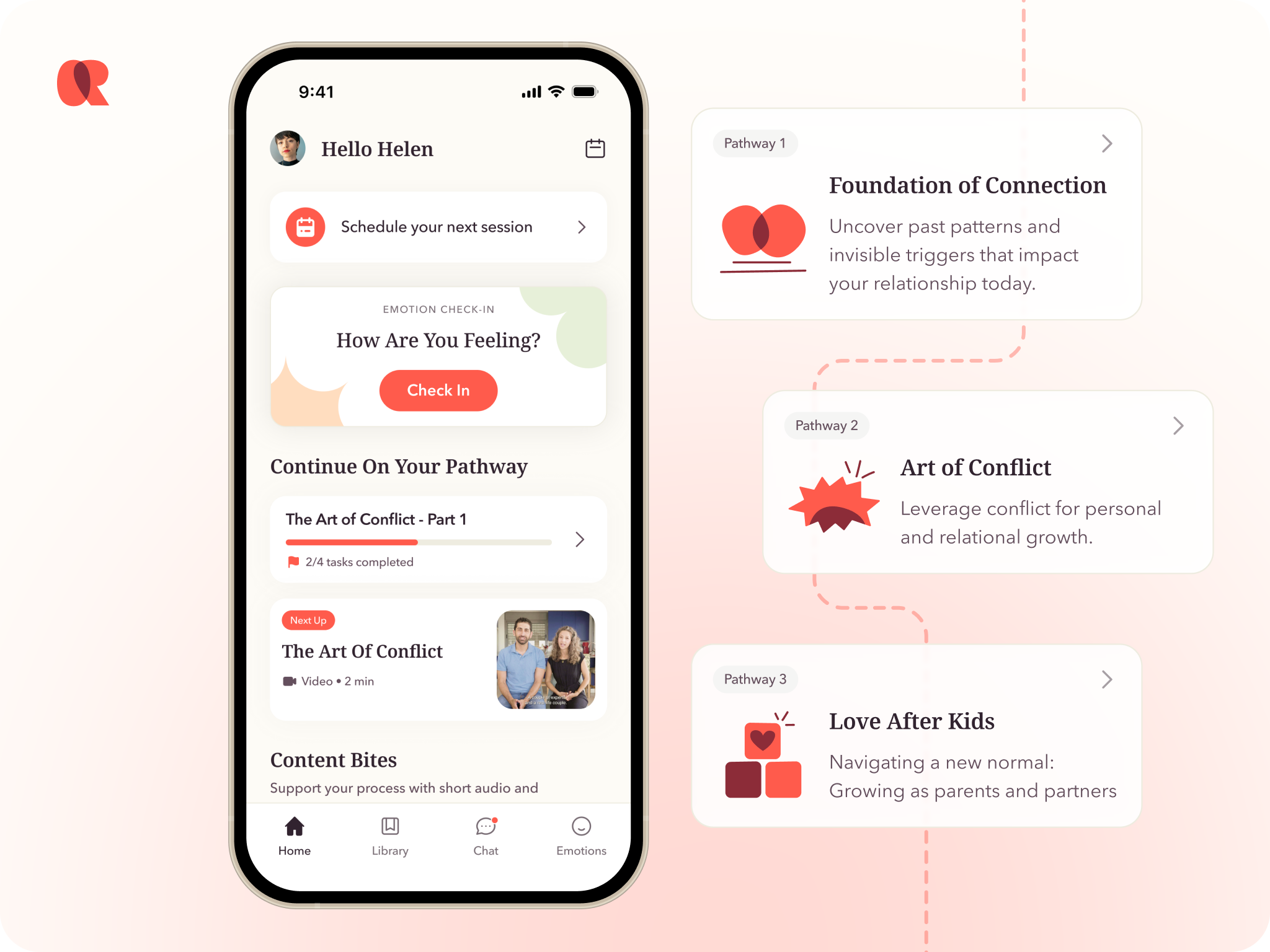
In my role leading the team of Relationship Experts at OurRitual, I have the opportunity to help shape our digital content as well as guide the Expert team in how to support members in integrating the exercises and content on app into sessions and into their lives. My academic training emphasized looking to scientific evidence to ground professional decisions and I’m excited about how OurRitual continuously leans into research when we create content for our members and guide our Expert team in their work with members in sessions.
Our members often write to us, telling us how helpful they find the app content alongside how much they appreciate their sessions with their Relationship Expert. We’re excited to continue developing resources our members find helpful between sessions so that the support we offer can encompass the hours of their lives both in and out of sessions.
Naomi Dardik, Clinical Program Research and Development